PK-R08 · Rodents
How to get rid of Pine voles
Microtus pinetorum
Need a look-alike split? Use Yard rodent identification, then follow the control sequence on this page.
Pine voles work underground. They girdle roots, so a tree dies while the trunk looks intact — a nasty surprise at bloom. They prefer loose, organic soil and heavy mulch. Control is harder than meadow voles because traps must sit in subsurface runways. Reducing mulch depth, soil compaction where appropriate, and professional orchard programs matter. If your apple tree wilted from below, dig a careful inspection hole before you blame drought.
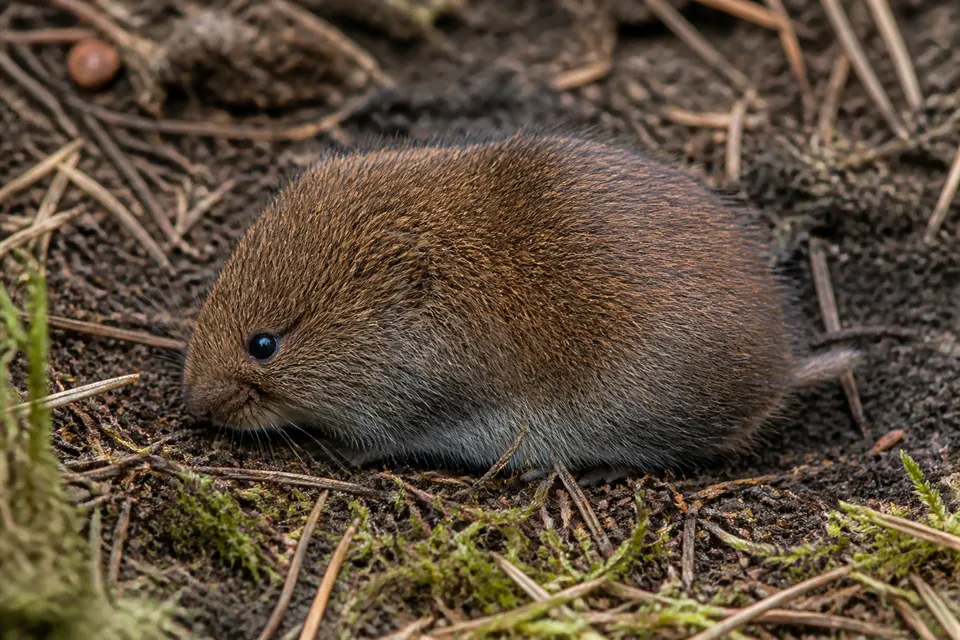
How to identify Pine vole
- Tiny eyes, short tail, chestnut fur, underground habit.
- Below-ground tunnels in root zones; fewer obvious lawn highways than meadow voles.
Signs of an infestation
- Trees or shrubs dying with girdled roots.
- Soft soil and holes at the base of ornamentals.
- No molehills, but root bark missing.
Biology and why they show up
They eat roots and bulbs. They live in family groups in burrow systems. Heavy bark mulch is a gift.
Health and property risk
Ornamental and orchard loss. Indoor invasion is uncommon.
Proven control sequence
Work in this order. Skipping inspection or exclusion is why most “treatments” bounce back in a week.
- Find the underground runway. Penn State Extension notes that pine vole damage is often invisible until the tree is already weak. Probe the drip line, open a subsurface tunnel, set a snap trap in the run, and cover it. Check often. This is not a kitchen-wall mouse placement.
- Thin the mulch. Keep mulch off trunks and shallower. Deep bark beds are habitat.
- Protect roots, not just the trunk. Hardware-cloth baskets for bulbs and new trees. Trunk wraps help meadow voles at the snow line; they do not stop pine voles feeding on roots.
- Labeled orchard baits are a specialist tool. Not a suburban weekend broadcast, and not an indoor mouse bait block. Follow the label and non-target warnings.
Matching tools for these steps can be bought on Amazon. Buy the field kit.
Tools for pine voles in orchards and beds
Pine voles girdle roots underground. Trap in the covered runway at the drip line, and basket new plants with hardware cloth. A trunk wrap is a meadow-vole tool.
As an Amazon Associate, Pest Kill earns from qualifying purchases. The EPA label is the law for any pesticide. These links match the sequence on this page — they are not a shopping list instead of identification. Details: advertising disclosure. Browse the full tools catalog.
Hardware
Victor M150 metal-pedal mouse snap traps (12-pack)
Open a subsurface runway at the drip line, set the trap in the tunnel, and cover it. This is not a kitchen-wall mouse placement. Check often and keep pets off the set.
Hardware
1/4-inch hardware cloth for root baskets
Basket new bulbs and young orchard trees so pine voles cannot girdle roots underground. A plastic trunk wrap does not protect the root zone.
Prevention that actually sticks
- Do not volcano-mulch trees.
- Monitor orchards in fall before freeze.
When to hire a licensed professional
Commercial fruit growers should use extension IPM. Homeowners with a dying specimen tree may need an arborist plus trapping, not a lawn service selling “mole foam” for the wrong animal.
United States and Tier 1 notes
Appalachians, Mid-Atlantic orchards, parts of the Midwest. Not a desert species.
Common questions
Can I flood the tunnels?
Waterlogging a root zone to punish voles often punishes the tree first. Trap and modify habitat.
Are pine voles a house-mouse problem?
No. Pine voles girdle roots underground in orchards, beds, and woods. Indoor snap-trap programs for house mice do not treat a root zone. Penn State Extension notes that damage is often invisible until the tree is already weak.
Will a hardware-cloth trunk guard stop pine voles?
Trunk guards help meadow voles that girdle at the snow line. Pine vole feeding is mostly on roots. Thin the mulch, find the tunnel at the drip line, and trap in the runway. Labeled orchard baits are a specialist tool, not a lawn broadcast.