PK-W05 · Nuisance wildlife
How to get rid of Moles
Talpidae (Scalopus and others)
Moles eat earthworms and grubs. They make surface ridges and volcano mounds. They do not eat your tulip bulbs (voles do). Control that works is trapping in active tunnels, not chewing gum, not flood folklore, not a yard-wide rodenticide that misses insectivores and kills dogs. If the damage is surface runways in grass after snow, think voles. Identify the mound: crescent gopher vs mole volcano vs vole path.
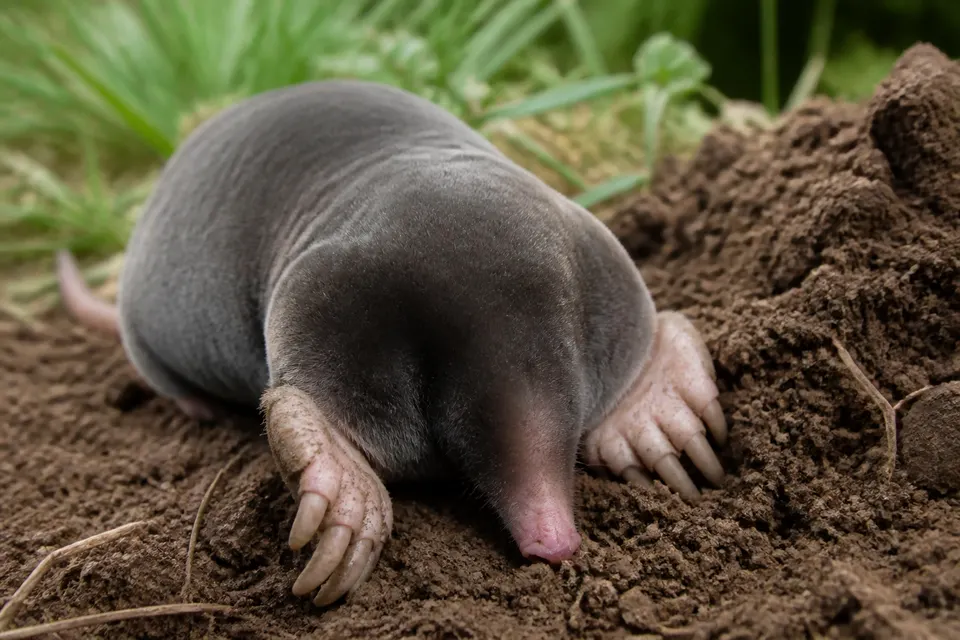
How to identify Mole
- Ridged surface tunnels, conical molehills, velvety fossorial mammal, not seen by day usually.
- Insectivore — not a mouse.
Signs of an infestation
- Soft ridges you can step down.
- Molehills in a line. Not plant girdling (voles).
Biology and why they show up
High metabolism, worm diet. Active in moist soil. They are not rodents (different control products often).
Health and property risk
Lawn aesthetics, trip hazards, disruption of irrigation. Disease is not the headline. Misapplied rodenticide is the headline.
Proven control sequence
Work in this order. Skipping inspection or exclusion is why most “treatments” bounce back in a week.
- Confirm mole vs vole vs gopher. Wrong ID wastes a year.
- Trap in active tunnels. Harpoon or scissor traps designed for moles, as local law allows. Cover for pets and children.
- Skip gum, sonic spikes, and lawn-wide poison. Evidence is poor or non-target risk is high.
Prevention that actually sticks
- Reduce grub feasts if that is part of the diet locally — still not a guarantee. Moist rich lawns attract worms, which attract moles.
When to hire a licensed professional
Large lawns, golf courses, and people who will not set traps correctly.
United States and Tier 1 notes
Eastern moles classic. Western species exist. UK moles are a cultural garden pest with different products.
Common questions
Will castor oil spray work?
Results are mixed and temporary. Traps in active runs remain the standard.