Rodents
Rodent trapping
Snap traps, when placed on runways and used in sufficient number, remain the most direct indoor rodent control that does not leave a poisoned carcass in a wall. Glue boards for rodents are restricted or discouraged in many jurisdictions because animals suffer and non-targets stick. This directory prefers mechanical traps plus exclusion.
When this method is the right tool
Use trapping inside occupied structures, in food facilities, and anywhere rodenticides would create secondary-poisoning or carcass-odor risk. Combine with exclusion or you will trap the same opening forever.
How to do it
- Map runways. Look for rub marks, droppings, and grease along walls. Rodents are thigmotactic — they hug edges. Place traps perpendicular to the wall, trigger against the wall.
- Use enough traps. A mouse job is dozens of traps, not two. A rat job is fewer, heavier traps, placed and left undisturbed.
- Pre-bait if rats are shy. Norway rats can ignore a new object. Leave unset traps with bait until bait is taken, then set.
- Choose bait that matches the site. Peanut butter is common; in food plants use a labeled attractant that will not contaminate product. Nesting material (cotton) sometimes beats food for mice.
- Check daily. Remove carcasses promptly. Reset. If nothing hits, you are off the runway, not “out of rodents.”
Traps this method is written for
Snap traps, glue boards, and enough of them on the runway. The page is the placement map.
As an Amazon Associate, Pest Kill earns from qualifying purchases. The EPA label is the law for any pesticide. These links match the sequence on this page — they are not a shopping list instead of identification. Details: advertising disclosure. Browse the full tools catalog.
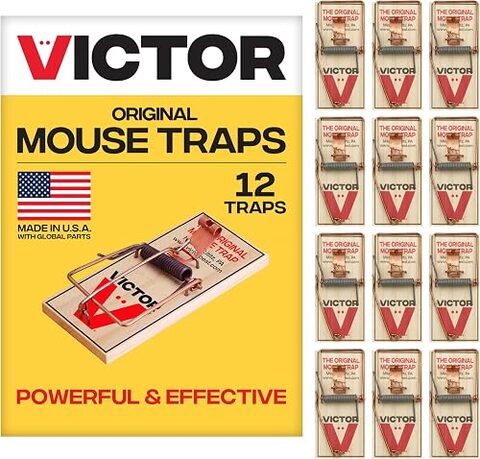
Hardware
Victor M150 metal-pedal mouse snap traps (12-pack)
Placement beats brand: perpendicular to the wall, on the runway, enough traps. Peanut butter stays on the pedal. A 12-pack is the right unit, not one trap in the middle of the room.
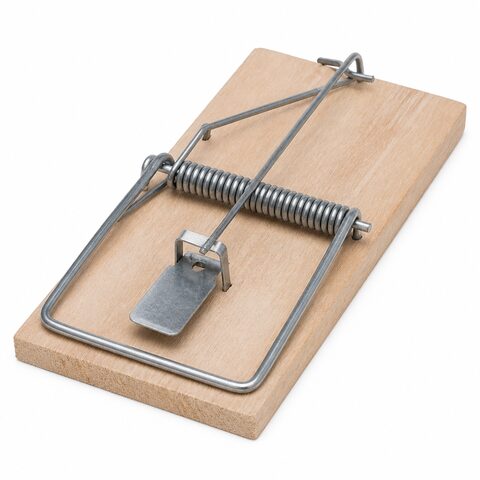
Hardware
Victor M326 rat snap traps (2-pack)
Rats need a larger trap than mice. Set several along the actual runway, in boxes if pets or children use the room. Pre-bait unset for a night if they are shy.
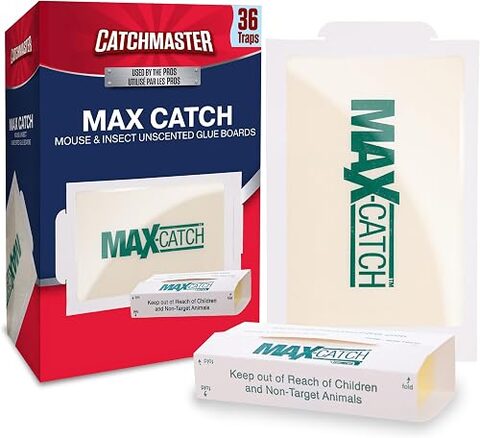
Hardware
Catchmaster mouse and insect glue traps
Pre-baited boards for mice and crawling insects. Set on the runway, not in the middle of the room. Same child-and-pet caution as any glue tray.
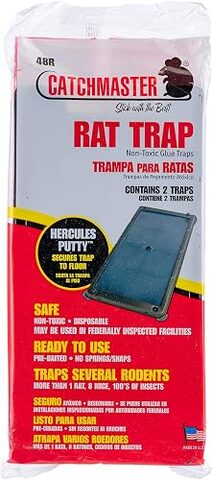
Hardware
Catchmaster 48R rat-size glue boards (2-pack)
Rat-sized trays for floor runways where you want a catch without a snap trap. Place along walls. Keep out of reach of children and pets; vegetable oil releases the adhesive if something else sticks.
Mistakes that waste money
- One trap in the middle of a room.
- Using glue boards where children, pets, or non-target wildlife can reach them.
- Stopping after the first mouse.
Safety
Keep traps out of reach of children and pets or use locked trap boxes. Wear gloves. Wash after handling traps. If you are in a hantavirus-risk region, follow CDC cleaning guidance.
Pests this method is written for
Common questions
Are live traps better?
Live traps still require a legal, humane endpoint. Releasing commensal rats on a neighbor’s block is not control, and in many cities it is not legal. Snap traps plus exclusion are the usual indoor standard.
Traps or poison — which first?
Inside occupied buildings, traps first. You confirm the kill and you do not leave a carcass in a wall. Rodenticides belong in labeled outdoor stations after sanitation, not as a default indoor mouse program.
How much does a professional rodent visit cost in the US?
Typical residential inspection and first service often lands around $150–$400, with follow-ups and exclusion extra. Attics, sewers, and apartment stacks cost more. Pay for a runway map, not a monthly spray with no findings.