PK-P07 · Pantry and fabric pests
How to get rid of Old house borers
Hylotrupes bajulus
Need a look-alike split? Use Powderpost beetle vs old house borer, then follow the control sequence on this page.
Old house borers are longhorned beetles whose larvae tunnel in softwood (pine, fir) framing. The name misleads: they like the sapwood of relatively new lumber too. Homeowners hear rasping in walls and find oval exit holes larger than powderpost shot-holes. Treatment is inspection, moisture control, and often professional — not a consumer fogger. They are not termites. If you hear chewing in a beam, document and call a wood-destroying-insect inspector.
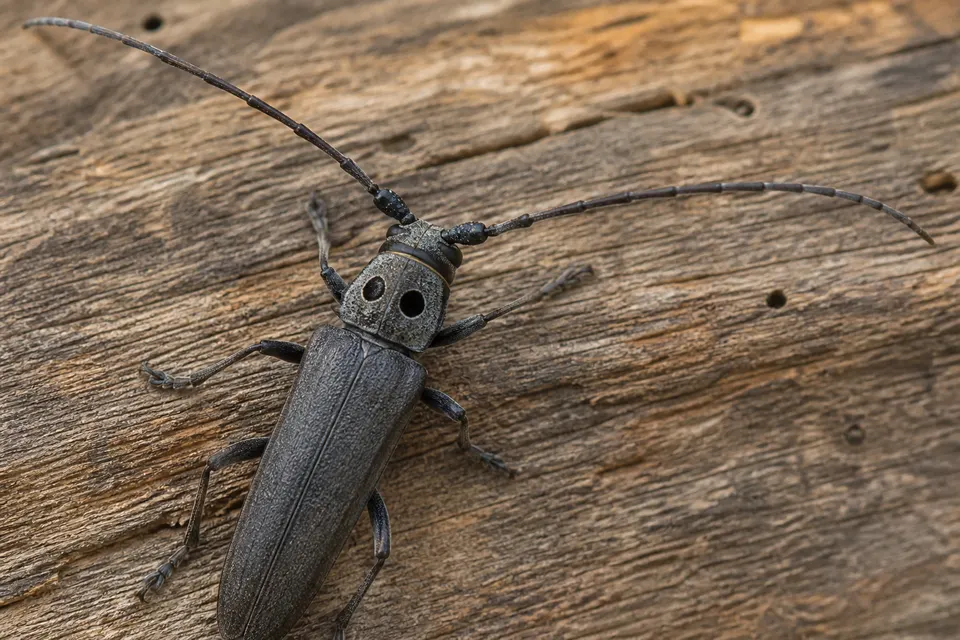
How to identify Old house borer
- Oval exit holes larger than lyctid shot-holes.
- Rasping sounds in beams. Frass packed in galleries.
- Adults are brown longhorned beetles — rarely seen.
Signs of an infestation
- Noises in framing.
- Powder at base of a stud.
- Oval holes in pine trim or joists.
Biology and why they show up
Long larval life in wood. Attracted to sapwood of conifers. Moisture helps but they are not dampwood termites.
Health and property risk
Framing damage over years. Structural if ignored in severe cases.
Proven control sequence
Work in this order. Skipping inspection or exclusion is why most “treatments” bounce back in a week.
- Inspect and identify. Wrong ID vs carpenter ants vs termites wastes thousands.
- Moisture and replacement. Replace badly damaged members. Dry the structure.
- Professional treatment if active throughout framing. This is not a pantry moth cleanout.
Prevention that actually sticks
- Use properly dried lumber. Avoid chronically wet crawlspaces.
When to hire a licensed professional
Yes.
United States and Tier 1 notes
Eastern US primarily. Europe has the same species as a structural pest.
Common questions
Does “old house” mean my new build is safe?
No. The beetle infests sapwood of pine regardless of the house’s birthday.