PK-A02 · Ants
How to get rid of Red imported fire ants
Solenopsis invicta
Need a look-alike split? Use Fire ant mound identification, then follow the control sequence on this page.
Red imported fire ants are a mound-and-sting problem. Broadcast a labeled fire ant bait when workers are foraging, then treat individual mounds as the label allows. Do not pour gasoline. Do not mow a mound thoughtlessly. Stings that affect breathing are emergency care.
Fire ants build fluffy mounds in yards, parks, and electrical equipment. They sting in groups. For some people that is medical (anaphylaxis). For everyone else it is a reason not to mow a mound thoughtlessly. The proven landscape method is broadcast bait timed to foraging (often when the weather is mild and they are not flooded), then individual mound treatments as labeled — not gasoline, not a shovel-only war that spreads colonies. They are an invasive ecological problem as well as a yard problem. If you have breathing difficulty after stings, that is emergency care, not a pesticide aisle.
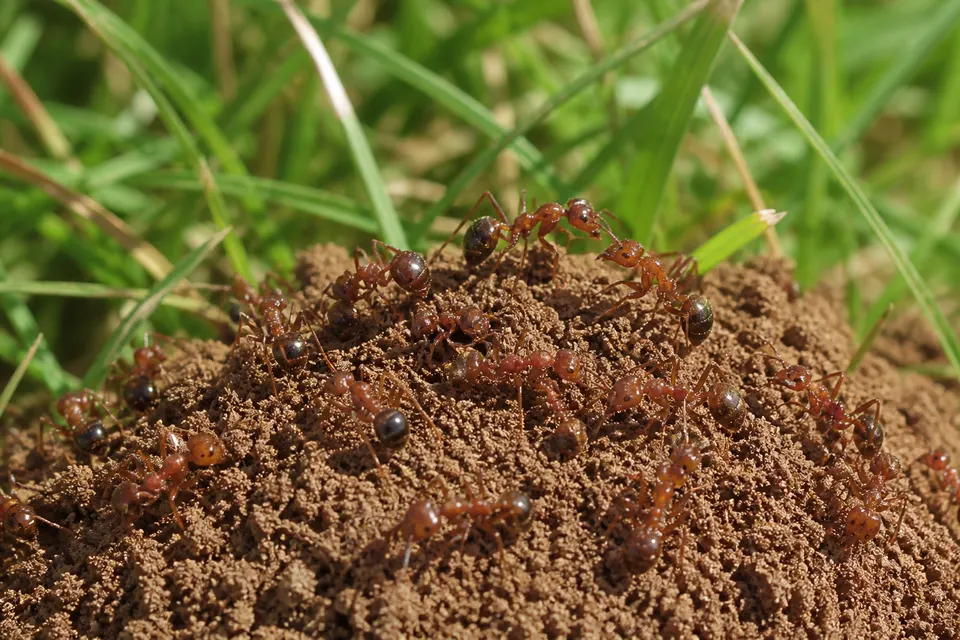
How to identify Red imported fire ant
- Polymorphic workers, aggressive swarming from mounds when disturbed.
- Mounds with no obvious central hole (foraging tunnels are subterranean).
- Sting with a pustule that may form — a clinical clue, not a parlor trick.
Signs of an infestation
- Mounds in lawns, playgrounds, and along sidewalks after rain.
- Ants in electrical boxes and AC units.
- Painful stings on ankles.
Biology and why they show up
Supercolonial in parts of the range. They flood-up onto grass after rains. Baits work when foragers take them back to the queen. Hot afternoon applications often fail because foraging paused.
Health and property risk
Medical stings, livestock and wildlife harm, electrical shorts, agricultural impact. Not an indoor German-cockroach analog, though they will enter structures.
Proven control sequence
Work in this order. Skipping inspection or exclusion is why most “treatments” bounce back in a week.
- Use labeled fire ant baits correctly. Broadcast per label when ants are foraging. Do not mix with a fertilizer that they ignore. Watering instructions on the label matter.
- Treat individual mounds as labeled. Drenches or baits designed for mounds. Never gasoline. Never exploding folklore.
- Protect people first. Playgrounds and pads: bait programs plus shoes. Allergic individuals need a clinician’s plan.
- Electrical equipment. Professionals treat meters and AC units. DIY dusts in live electrical gear are a hospital story.
Matching tools for these steps can be bought on Amazon. Buy the field kit.
Tools for fire ants in turf
Bait the foragers. Do not kick the mound as a plan. Stings can be medical.
As an Amazon Associate, Pest Kill earns from qualifying purchases. The EPA label is the law for any pesticide. These links match the sequence on this page — they are not a shopping list instead of identification. Details: advertising disclosure. Browse the full tools catalog.
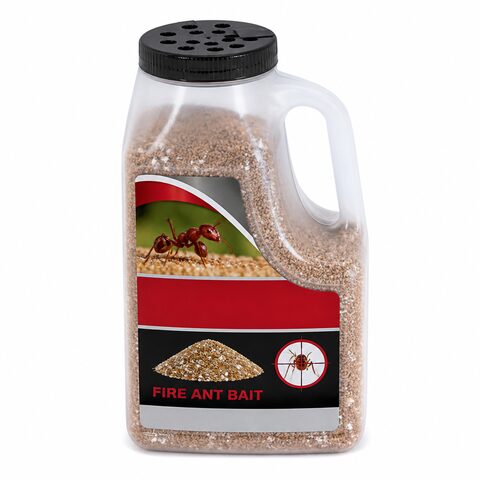
Labeled product
Fire ant bait granules
Broadcast bait that workers carry beats kicking a mound. Read the EPA label for turf, vegetable gardens, and water. Stings can be medical — this is not a first-aid kit.
Mound identification before you treat
A fire ant mound is usually fluffy soil with no obvious central hole on top. Foraging tunnels run underground. Disturb it and workers swarm. Pavement ants nest in cracks. Native mound-building ants exist at the edge of the range. If you are unsure of the mound, use the Fire ant mound identification first, then come back here for bait timing.
Broadcast bait vs mound treatment
| Broadcast bait | Individual mound treatment | |
|---|---|---|
| Best for | Yards, parks, and properties with many mounds | A few mapped mounds after bait, or a mound against a pad |
| When | Mild weather when foragers are active, not flooded, not peak afternoon heat | Same foraging window; follow the specific product |
| How it works | Workers carry bait to the colony, including queens in many labeled uses | Drench or labeled mound bait kills that nest if you hit the biology |
| Skip | Mixing bait into fertilizer they ignore; watering against the label | Gasoline, boiling-water-as-a-personality, exploding folklore |
Integrated pest management (IPM) is the order: identify, threshold, bait, then spot treat. Pesticide safety and the EPA label still applies. The Ants hub is the species split.
Seasonal timing in the US South
Baits fail when ants are not foraging — flooded after rain, or sitting out a hot afternoon. Extension programs in Texas, Florida, and the Gulf still time broadcast baits to spring and fall foraging windows, with summer work on cooler mornings. Electrical boxes and AC units are a professional job; DIY dust in live gear is a hospital story.
Stinging safety
Fire ants sting in groups. A white pustule may form. That is a clinical clue, not a parlor trick. Anyone with breathing difficulty, swelling of the throat, or a known venom allergy needs emergency care — not a pesticide aisle. Playgrounds and pads: shoes, bait programs, and a clinician’s plan for allergic people.
Prevention that actually sticks
- Do not move infested nursery stock illegally (quarantines exist).
- Inspect new sod and potted plants.
When to hire a licensed professional
Schools, parks, and utilities. Anyone with venom allergy. Large properties.
United States and Tier 1 notes
Texas, Gulf, Southeast. California has had detections and eradication efforts historically — check current county status. Australia has biosecurity fire ant programs that are not DIY.
Common questions
Will boiling water work?
It can kill some ants and also scald grass, kids, and utilities. Baits are the IPM standard for yards.
What is the best fire ant control?
Labeled broadcast bait while they forage, then mound treatments as needed. Habitat and quarantine rules still matter for nursery stock. Gasoline is not a pesticide use.
Will killing one mound stop fire ants?
Often no. Colonies and neighboring mounds refill the yard. Broadcast bait is how you treat the population, not one decorative hill.
Can I treat fire ants in winter?
In much of the South they still forage on mild days. Frozen or flooded soil is a wait. Follow local extension, not a New England calendar.