Mound shape and look-alikes
Fire ant mound identification
This guide is the mound: shape, what happens when you disturb it, and when the pile of dirt is a different ant. Broadcast bait, mound treatments, and sting first aid are on the fire ant page.
Mound shape and sting behaviour
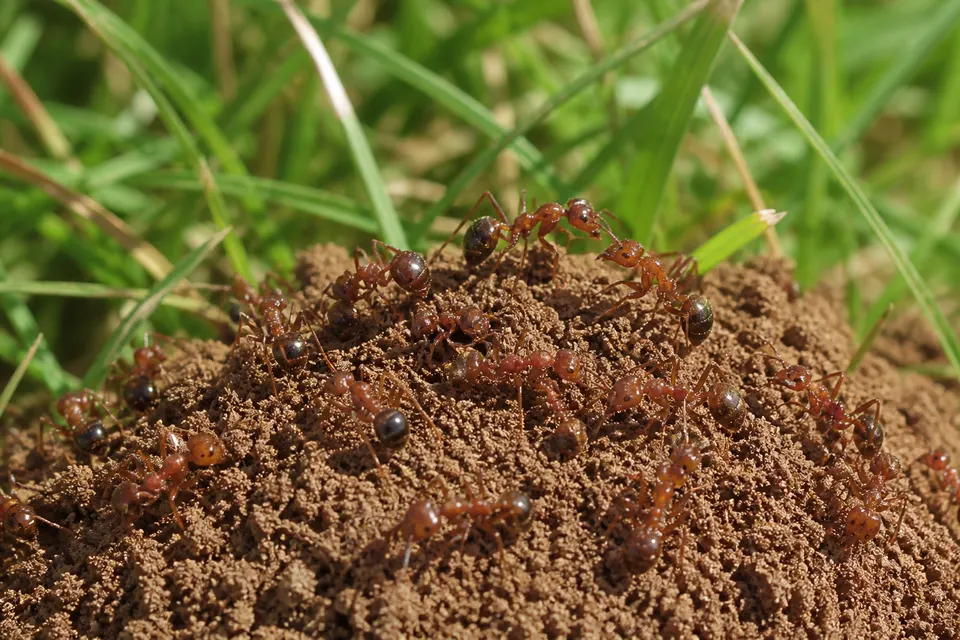
Red imported fire ant mounds are usually fluffy soil in lawns, parks, and along sidewalks after rain. There is often no obvious central hole on top. Foraging tunnels are subterranean. Workers are different sizes. Disturb the mound and they swarm and sting. A white pustule may form later — a clinical clue, not a game.
They also nest in electrical equipment and AC units. That is not a shovel job.
Look-alikes
Pavement ant nests in sidewalk cracks with small dirt piles, not fluffy yard domes. Argentine ant makes trails without classic fire ant mounds. Native mound-building ants exist at range edges. If you are north of established RIFA country, get a local ID before you buy fire ant bait by the bag. USDA and state maps still matter for nursery quarantines.
When not to disturb it
Do not mow a mound thoughtlessly. Do not pour gasoline. Do not shovel-only a supercolonial landscape — you scatter queens and get stung. Children and allergic people: shoes, distance, emergency plan. Open Red imported fire ant for broadcast bait vs mound treatment and seasonal timing.
Species pages
Each species article has the control sequence and safety notes. This page only splits look-alikes.
Common questions
How can I tell a fire ant mound from a gopher mound?
Fire ant mounds are ant-built soil with swarming workers when disturbed. Pocket gophers leave fan-shaped earth and eat plants. Different kingdom of problem.
Should I kick the mound to see if they sting?
No.