PK-S06 · Wasps, hornets, and bees
How to get rid of Honey bees (swarms and structure occupancy)
Apis mellifera
Honey bees are agricultural animals. A swarm on a branch is usually temporary — call a beekeeper first. A colony in a wall needs comb removed, not a secret spray that leaves rotting honey. Africanized lineages in parts of the Southwest and Gulf are more defensive: give space, hire specialists. This site will not publish DIY hive-poison recipes. Mass stings: leave the area and get care.
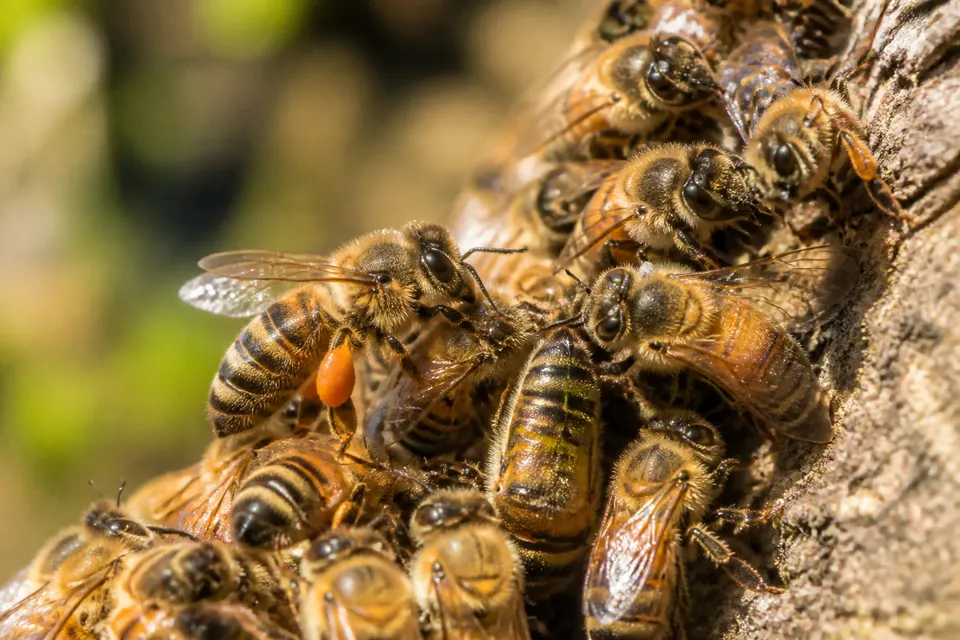
How to identify Honey bee (swarms and structure occupancy)
- Fuzzy, pollen baskets, swarm clusters.
- Wax comb in voids if established.
- Not hamburger scavengers like yellowjackets.
Signs of an infestation
- A hanging cluster on a shrub for hours to a couple of days.
- Season-long traffic into a wall vent (established colony).
Biology and why they show up
Perennial social colonies. Swarms are reproduction. Africanized hybrids in some US regions require extra caution.
Health and property risk
Stings, leftover honey attracting other pests, civil issues if you kill a neighbor’s livestock. Rotting comb after a lazy spray.
Proven control sequence
Work in this order. Skipping inspection or exclusion is why most “treatments” bounce back in a week.
- Swarms: beekeeper. Local clubs will often collect. Do not spray a cluster on a branch.
- Wall colonies: cut-out or trap-out. Specialists. Remove comb. Then seal.
- Africanized range: professionals only. Do not approach a highly defensive colony. Follow AZ/TX extension guidance.
Prevention that actually sticks
- Screen vents after professional removal.
- Do not store empty hives as ornaments if you are not keeping bees.
When to hire a licensed professional
Structure occupancy always. Swarms: beekeeper.
United States and Tier 1 notes
US-wide. Africanized hybrids in parts of the Southwest and Gulf. UK/EU: even more reason to call a beekeeper.
Common questions
They have been on a branch three hours. Spray?
No. Call a beekeeper. Swarms often move on.