Wasps, hornets, and bees
Stinging insect identification and control
Stinging insects are where DIY goes badly. A yellowjacket nest in a wall void is not a job for a broom. Honey bees are agricultural animals; the correct call is often a beekeeper, not a can of spray. Carpenter bees drill clean round holes in fascia and decks. Paper wasps under eaves are usually a late-summer nuisance, not a medical emergency — unless you are allergic. Large brown cavity nesters at night lights are often European hornets — compare them with yellowjackets in the identification guide before you treat the wrong nest.
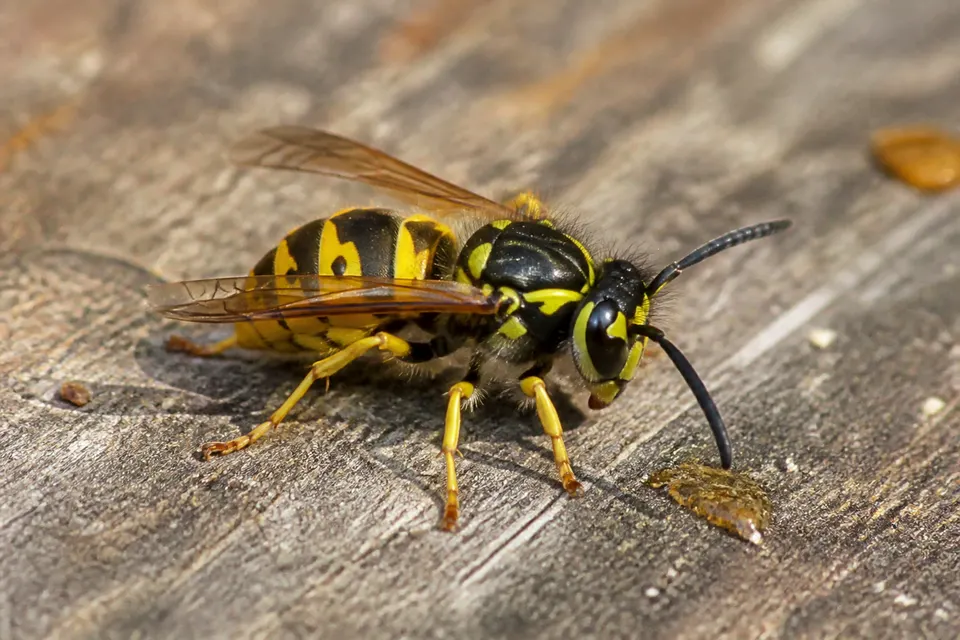
Yellowjacket
Vespula and Dolichovespula spp.
Yellowjackets scavenge meat and soda in late summer and will defend a ground or wall nest with enthusiasm. A broom is an ER…
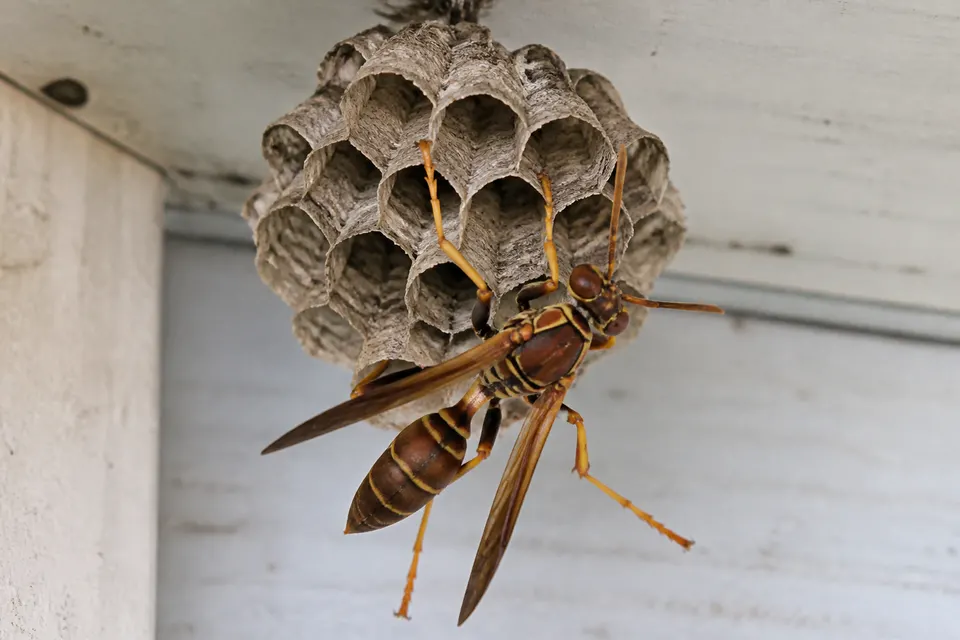
Paper wasp
Polistes spp.
Paper wasps build open umbrellas of comb, not enclosed footballs. They hunt caterpillars and are usually calmer than…
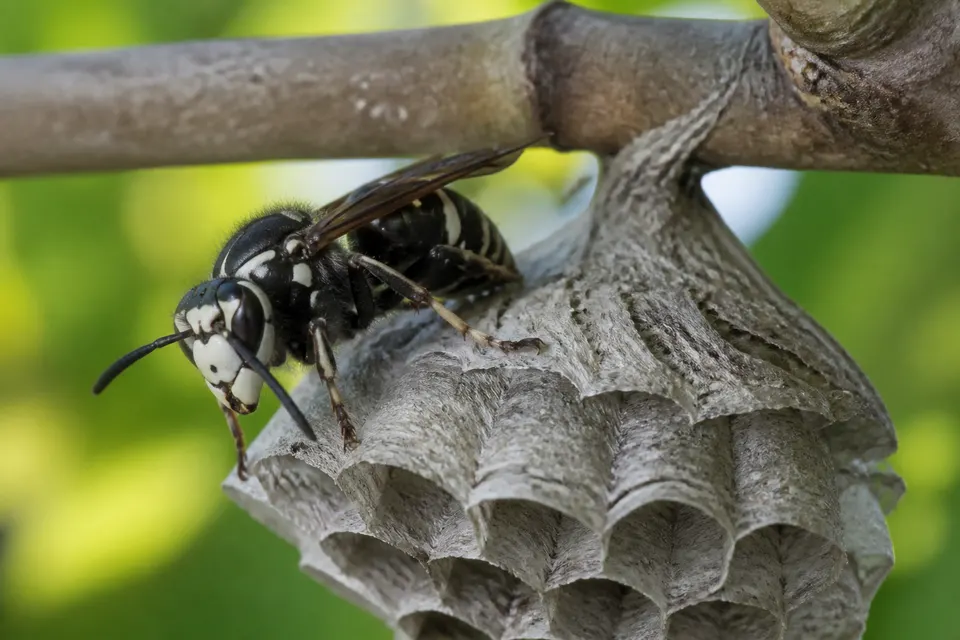
Bald-faced hornet
Dolichovespula maculata
Bald-faced hornets are aerial yellowjackets with white faces and a gray enclosed nest that can reach basketball size. They…
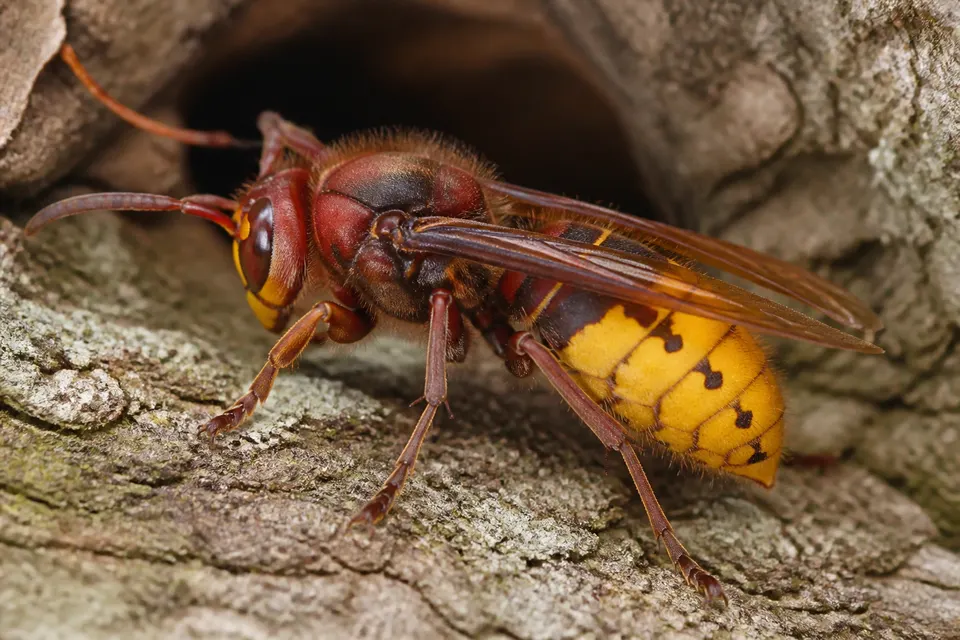
European hornet
Vespa crabro
European hornets are true Vespa — larger and browner than yellowjackets — nesting in cavities and sometimes flying at night…
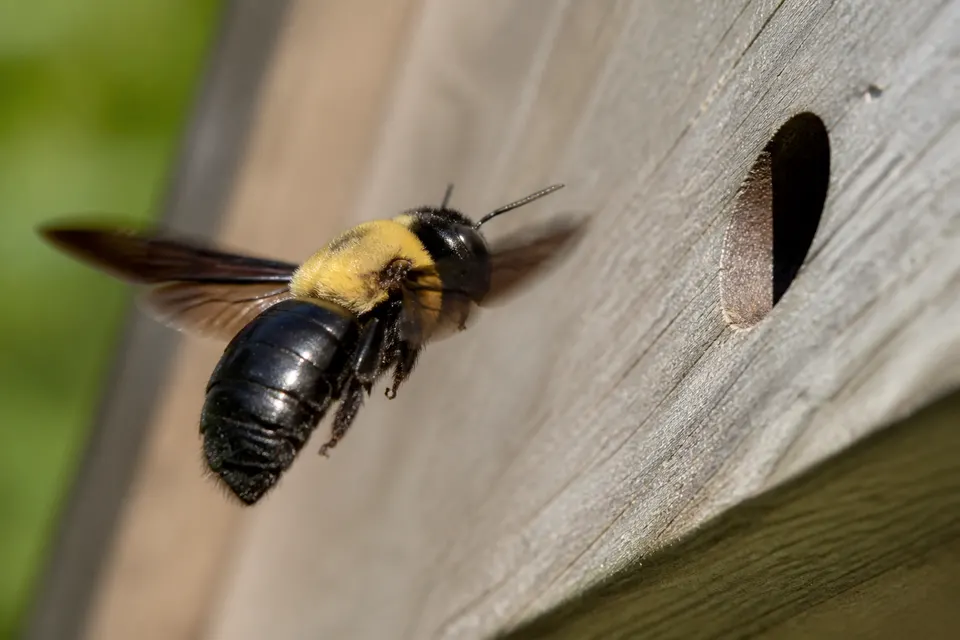
Carpenter bee
Xylocopa spp.
Carpenter bees drill neat half-inch round galleries in wood. Males hover and cannot sting; females rarely sting unless handled…
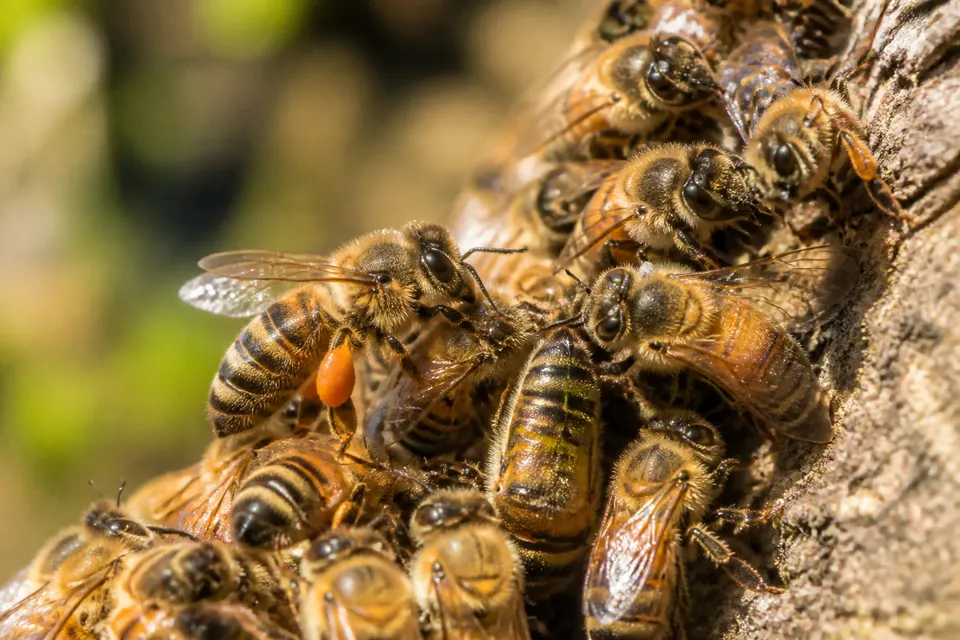
Honey bee (swarms and structure occupancy)
Apis mellifera
Honey bees are agricultural animals. A swarm on a branch is usually temporary — call a beekeeper first. A colony in a wall needs…