Stinging-insect identification
European hornet vs yellowjacket
Late-summer “kill the hornet” searches mix two jobs. Yellowjackets scavenge picnics and often nest in the ground. European hornets are larger, browner, cavity nesters that may hit lights at night. Neither is the Asian giant hornet. Removal steps are on the species pages; this page is ID, nest position, and when to hire help.
Size, color, and behaviour
| European hornet | Yellowjacket | |
|---|---|---|
| Look | Large brown-and-yellow Vespa | Smaller, bright yellow and black, less fuzzy than honey bees |
| Nest | Cavities: trees, barns, wall voids | Ground, play structures, wall voids; gray paper |
| Night | May fly at lights | Generally not a bedroom-window batterer |
| Food story | Predators of other insects; incidental at lights | Late-summer meat and soda scavengers |
Paper wasp builds open eave umbrellas. Bald-faced hornet builds a large gray aerial nest. Fuzzy pollen-carrying bees: beekeeper, not this page.
Nest position, aggression, professional triggers
A broom is an ER visit for either social vespid. Mark the entrance at dusk. Ground hole: yellowjacket logic. Soffit or hollow tree with large brown wasps: European hornet logic. Wall voids: hire help. Night treatment is about safety, not folklore. Anaphylaxis is emergency care. After the colony dies, Exclusion and sealing in winter. The full sequences are on the European hornet and Yellowjacket pages.
Species pages
Each species article has the control sequence and safety notes. This page only splits look-alikes.
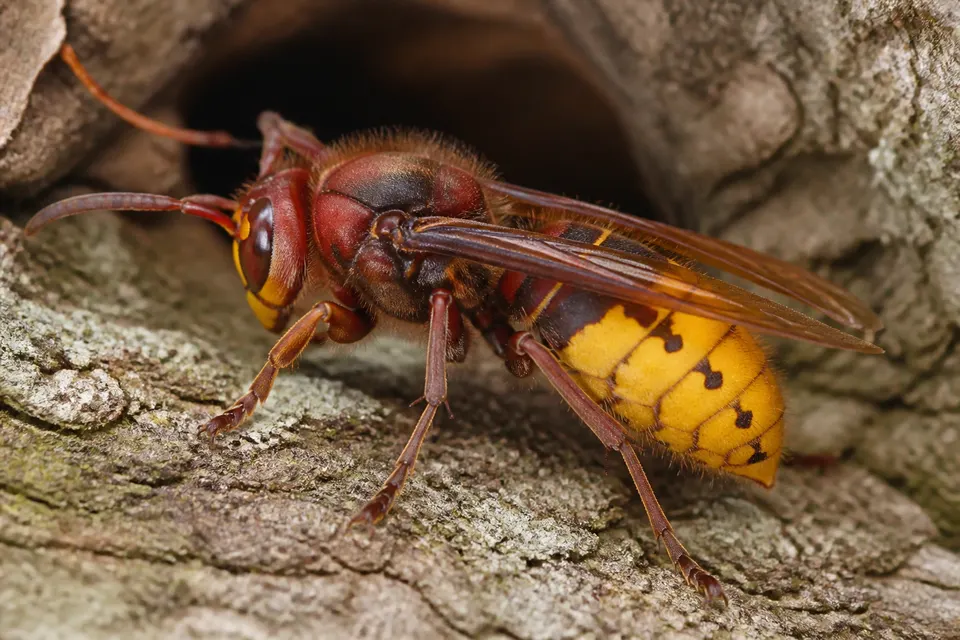
European hornet
Vespa crabro
European hornets are true Vespa — larger and browner than yellowjackets — nesting in cavities and sometimes…
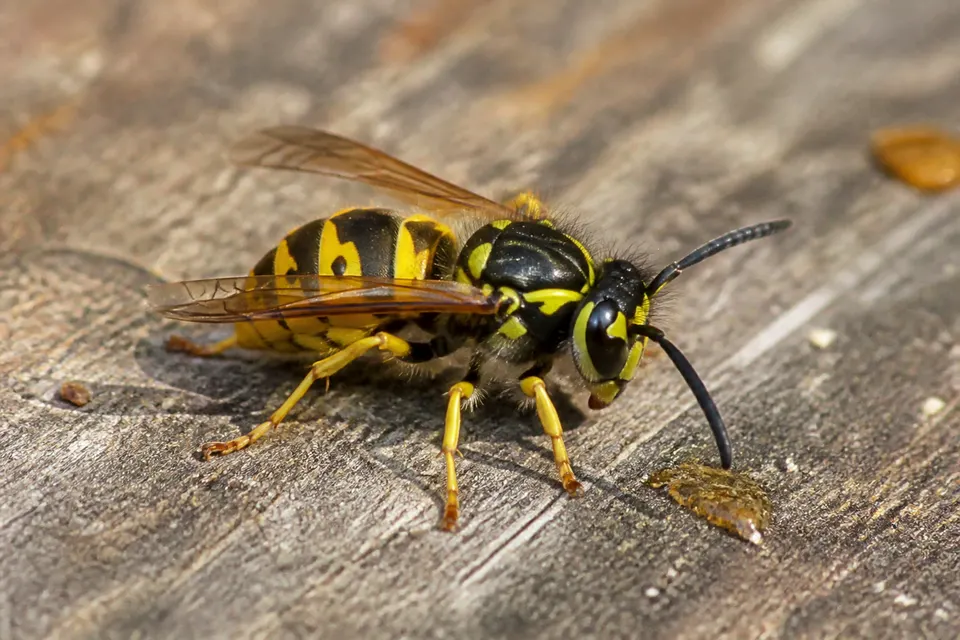
Yellowjacket
Vespula and Dolichovespula spp.
Yellowjackets scavenge meat and soda in late summer and will defend a ground or wall nest with enthusiasm. A…
Common questions
Is a European hornet a murder hornet?
No. That headline referred mainly to Vespa mandarinia. V. crabro is established in the eastern US.
Can I treat a wall nest myself?
Usually no. Sealing a live void nest drives them inward. Hire a licensed operator.