PK-R17 · Rodents
How to get rid of Nutrias
Myocastor coypus
Nutria are large, invasive, semi-aquatic rodents with orange incisors and a round, rat-like tail (not a beaver’s paddle). They eat marsh vegetation down to mud and burrow into levees and pond banks. This is not a kitchen pest. Control is a coordinated invasive-species program: trapping, habitat, and in some states bounty or agency programs. Do not treat them as Norway rats with attic stations. If they are in a backyard pond, you are in wildlife-agency territory.
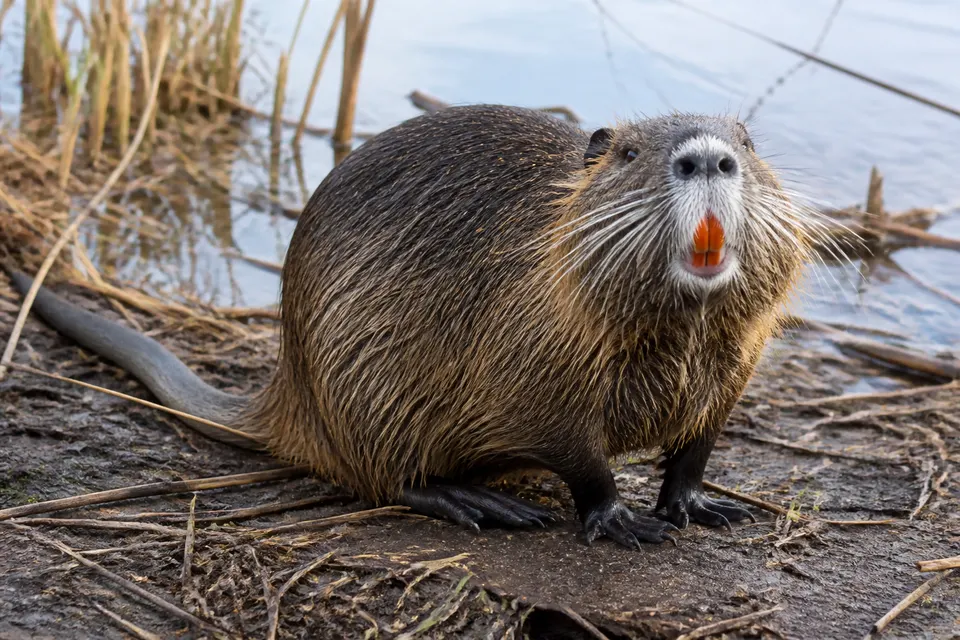
How to identify Nutria
- Large (10+ pounds possible), white muzzle, orange teeth, round scaly tail, webbed hind feet.
- Bank burrows at waterlines. Cropped marsh “eat-outs.”
Signs of an infestation
- Collapsed pond banks.
- Clipped vegetation at water level.
- Tracks with webbed hind feet.
Biology and why they show up
They breed rapidly in warm wetlands. They eat almost any palatable aquatic plant. They are more cold-limited than beavers in some interiors, which is why Gulf populations exploded.
Health and property risk
Levee and wetland loss, water-quality hits, and competition with native muskrats. Disease is not the household-rat story, but wild-rodent hygiene still applies if you trap.
Proven control sequence
Work in this order. Skipping inspection or exclusion is why most “treatments” bounce back in a week.
- Call the agency program. Louisiana, Maryland, Oregon, and others have had coordinated nutria projects. Individual backyard poison is the wrong scale and often illegal.
- Trap as directed. Body-gripping and live traps in water sets are specialist tools with drowning and non-target risk — trained trappers only.
- Do not release. Invasive. Relocation is how the next parish gets them.
Prevention that actually sticks
- Do not “rescue” a large wetland rodent as a pet.
- Report new range expansions to state invasive-species contacts.
When to hire a licensed professional
Always. This is invasive-species work, not a consumer aerosol.
United States and Tier 1 notes
Gulf South is the core US story. Chesapeake restoration programs. Pacific Northwest pockets. Native to South America. UK and EU have their own coypu histories and eradications.
Common questions
Is it a beaver?
Beavers have paddle tails and different dam behavior. Nutria tails are round. Wrong ID, wrong program.