PK-L04 · Yard, turf, and garden pests
How to get rid of Sod webworms
Crambinae (several genera)
Sod webworms are dusk lawn moths whose larvae chew grass in silk tunnels and leave green pellets. Confirm larvae with a soap flush before you spray — drought, chinch bugs, and fungus make similar brown patches. Penn State Extension treats 10 to 15 larvae per square yard as a common home-lawn threshold. Scalped, stressed turf shows damage first.
Sod webworms are the tan moths that flutter across a lawn at dusk. Larvae notch grass and leave green pellets. Damage is often worse on golf-green-short turf. Birds feeding and moths at dusk are clues. Control is confirm larvae (not drought, not chinch, not fungus), then biologicals like Btk or labeled products if needed. Night moths are not armyworms always — armyworms can be a different, more explosive pest.
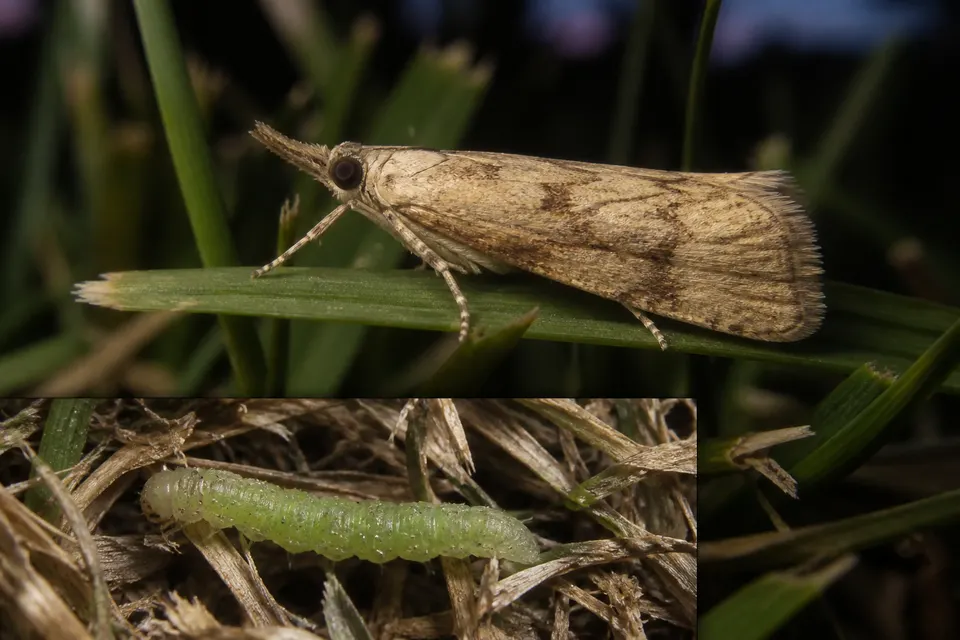
How to identify Sod webworm
- Small snout moths zigzagging at dusk.
- Larvae in silk in thatch, green frass, chewed blades.
- Damage irregular, often on the most manicured grass.
Signs of an infestation
- Dusk moth flight. Birds working the lawn.
- Turf that looks grazed in patches.
Biology and why they show up
Several generations possible. Drought-stressed turf shows damage first. Not a house moth (Indian meal moth is indoor pantry).
Health and property risk
Cosmetic turf. Confusion with armyworms in outbreak years — those can defoliate fast and may justify faster action.
Proven control sequence
Work in this order. Skipping inspection or exclusion is why most “treatments” bounce back in a week.
- Confirm larvae with a soap flush. Mix 2 tablespoons dish soap in 2 gallons of water and wet 1 square yard. Penn State Extension treats about 10–15 larvae per square yard as a home-lawn threshold. Do not spray moths in the air as the plan.
- Btk or labeled turf products when thresholds are met. Biologicals spare more non-targets when they fit. Follow the label.
What the damage looks like
Irregular grazed patches on the most manicured grass. Green frass in thatch. Tan snout moths zigzagging at dusk. Birds working the lawn. This is not a house moth (Indian meal moth is pantry). It is not Chinch bug (hot, dry St. Augustine, true bugs in thatch) and not White grub (turf) (carpet-roll roots).
Soap-flush identification
Penn State Extension’s disclosing mix is 2 tablespoons of liquid dishwashing detergent in 2 gallons of water, sprinkled over 1 square yard of turf. Larvae should come to the surface. If nothing comes up and the lawn is simply thirsty, do not add insecticide. Armyworms in outbreak years can defoliate faster — those may justify quicker action; get a local ID.
Treatment thresholds, timing, and recovery
Penn State Extension says treatment may be warranted at 10 to 15 larvae per square yard on a home lawn. UC IPM’s turf guidelines use a lower bar on stressed greens (more than 5 larvae per square yard) and about 15 per square yard in other turf. Healthy, well-watered lawns tolerate more feeding than drought-stressed, scalped grass.
Treat larvae, not moths in the air. Bacillus thuringiensis products labeled for turf work best on small larvae. Raise mowing height, irrigate correctly, and skip scalping. Golf and sports turf is a specialist job; many home lawns recover with birds, water, and time once counts are below threshold.
Prevention that actually sticks
- Do not scalp turf into a buffet of short, stressed blades.
- Healthy irrigation.
When to hire a licensed professional
Golf and sports turf. Home lawns: often a wait-and-see plus birds.
United States and Tier 1 notes
US-wide. Outbreak years get local extension alerts. Not a pantry moth.
Common questions
Are the moths eating my house siding?
No. Those dusk moths are looking for grass. Indoor moths are a pantry page.
How do I get rid of sod webworms?
Confirm larvae with a soap flush. If you count about 10 to 15 per square yard on a home lawn, a labeled Btk or turf insecticide can be justified. Fix drought stress. Do not spray moths at dusk as the plan.
Are sod webworms the same as armyworms?
No. Armyworm outbreaks can strip a lawn fast. Sod webworms are usually a slower, more cosmetic story. Get the larva right.