PK-L03 · Yard, turf, and garden pests
How to get rid of Chinch bugs
Blissus spp.
Chinch bugs suck turf in hot, sunny, drought-stressed lawns — especially St. Augustine in the South. Damage starts in the worst heat patches. Confirm with a coffee-can float or thatch inspection before you spray. Extra water does not replace identification and can invite fungus. Treat only if counts and damage warrant.
Chinch bugs suck turf in hot, dry, sunny lawns. Damage starts in the hottest, most stressed patches and spreads. People water more, which does not fix the insect and can worsen fungus. Diagnosis is a coffee-can float test or careful looking at the thatch. They are not grubs (no carpet roll). Control is water/stress management, resistant cultivars, and labeled products when counts demand — not a weekly “bug insurance” spray.
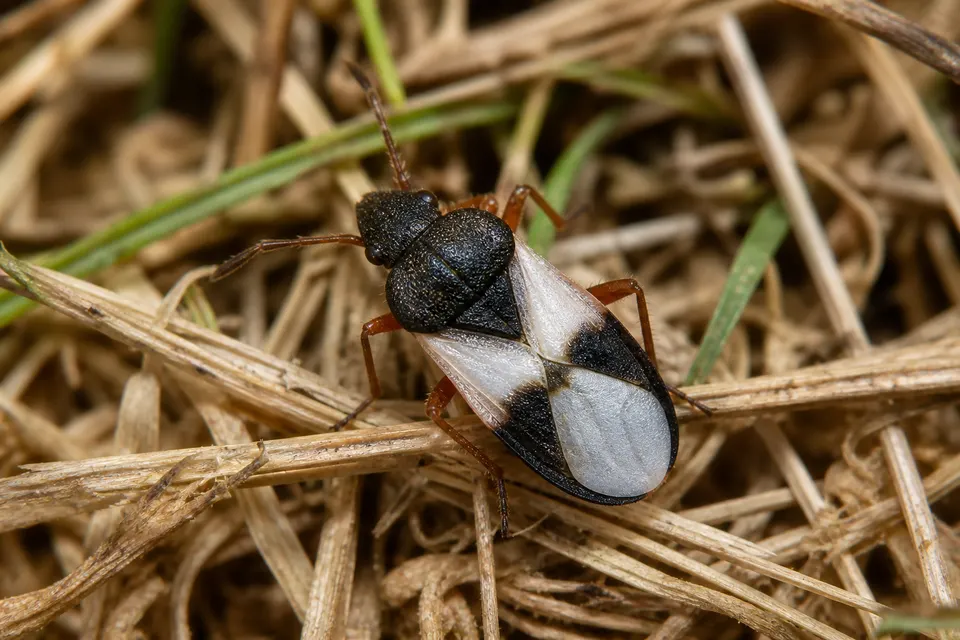
How to identify Chinch bug
- Small true bugs, black with white wings (adults), in thatch of hot lawns.
- Damage in sunny, stressed areas first. Distinct from brown patch fungus patterns if you look closely.
Signs of an infestation
- Spreading straw-colored turf in July heat.
- Bugs in a white paper test or can float.
- Dogs may be irritated in heavy infestations (rare).
Biology and why they show up
They thrive in drought-stressed, thatchy warm-season turf. Multiple generations in the South. Winter is not a Minnesota reset in Florida.
Health and property risk
Dead St. Augustine. Misdiagnosis leads to fungicide or grub product on the wrong pest.
Proven control sequence
Work in this order. Skipping inspection or exclusion is why most “treatments” bounce back in a week.
- Confirm with a float or visual in thatch. Do not treat “brown lawn” as one disease.
- Relieve stress. Proper irrigation, not daily puddles. Reduce thatch if it is a mattress.
- Treat only if counts and damage warrant. Labeled turf products. Spot treat hot spots. Read pollinator and water language.
Damage-map diagnosis
Walk the lawn at midday. Straw-colored turf in the hottest, driest, most compacted sun is the classic map. Shade often stays green. That pattern is not a uniform fertilizer skip and not a White grub (turf) carpet-roll. Sod webworm is dusk moths and chewed blades with green frass. Florida and Gulf lawns see this as a summer headline; it is not a Pacific Northwest story.
Float-can test vs irrigation stress
Drive a bottomless can into the thatch and fill with water. Chinch bugs float. Or part the thatch on a white sheet. If you find nothing and the soil is dust, you have a water-and-root story — irrigate correctly, do not add a weekly insecticide subscription.
They thrive in thatchy, stressed warm-season turf. Daily puddles do not move them and can worsen fungus. Resistant cultivars where extension recommends them beat calendar spraying. Integrated pest management (IPM) and Pesticide safety and the EPA label still apply; do not treat into a thunderstorm gutter.
Prevention that actually sticks
- Cultivars with better chinch tolerance where extension recommends them.
- Do not fertilize into a crunchy drought without water.
When to hire a licensed professional
Large southern lawns, sod farms. Homeowners can diagnose with a can of water.
United States and Tier 1 notes
Gulf, Florida, southern transition zone. Less a Pacific Northwest story. Follow local extension, not a New England calendar.
Common questions
I watered more and it got worse.
Chinch bugs like heat and stress; extra water may not move them and can invite fungi. Diagnose the insect.
How do I get rid of chinch bugs?
Confirm them, relieve drought stress, then spot-treat hot spots with a labeled turf product if counts warrant. Cultivar and irrigation beat weekly “bug insurance.”
Are cinch bugs the same as chinch bugs?
Yes — cinch is a common misspelling of chinch bug (Blissus). Same insect, same float test.
I watered more and the lawn got worse.
Chinch bugs like heat and stress; extra water may not move them and can invite fungi. Diagnose the insect.