Flies and gnats
Fly identification and control
Adult flies are the symptom. The control is the breeding site: a film in a drain, a potato in a crisper, a dead rodent in a void, wet potting soil, or a dumpster gasket. Cluster flies are a fall invasion of attics in older northern homes and are not a sanitation insult — they overwinter in wall voids. If you cannot tell fruit flies from fungus gnats from drain flies, use the small-fly comparison first. Cluster fly control stays on the cluster fly page; seal eaves before autumn.
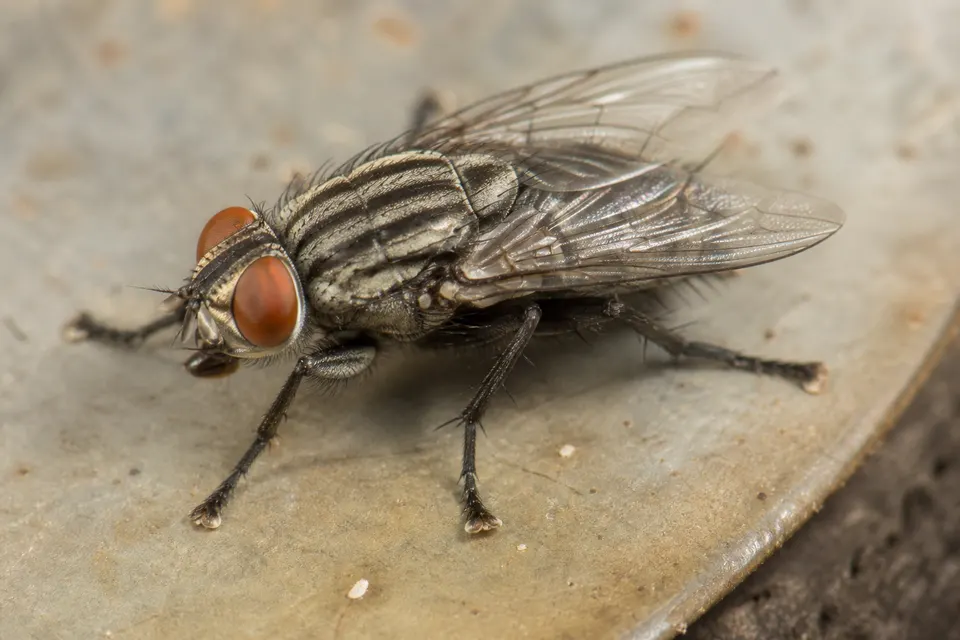
House fly
Musca domestica
House flies breed in decaying organic matter, not in mid-air. The adult on the screen is advertising a dumpster, a dog run, or a…
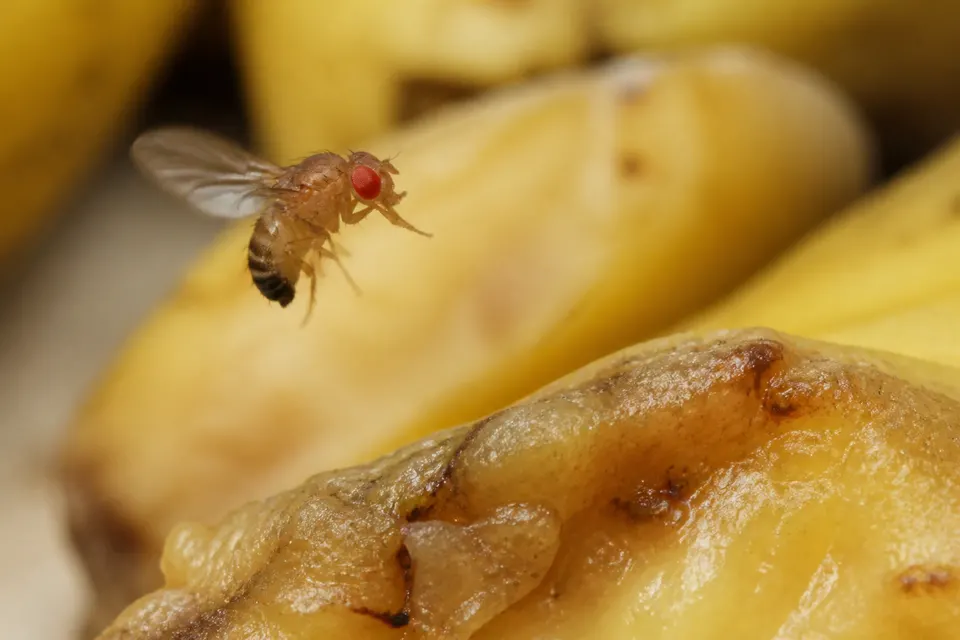
Fruit fly
Drosophila spp.
Fruit flies are tiny tan flies with red eyes (often) that breed in fermenting film: a potato in a crisper, a recycling bin, a…
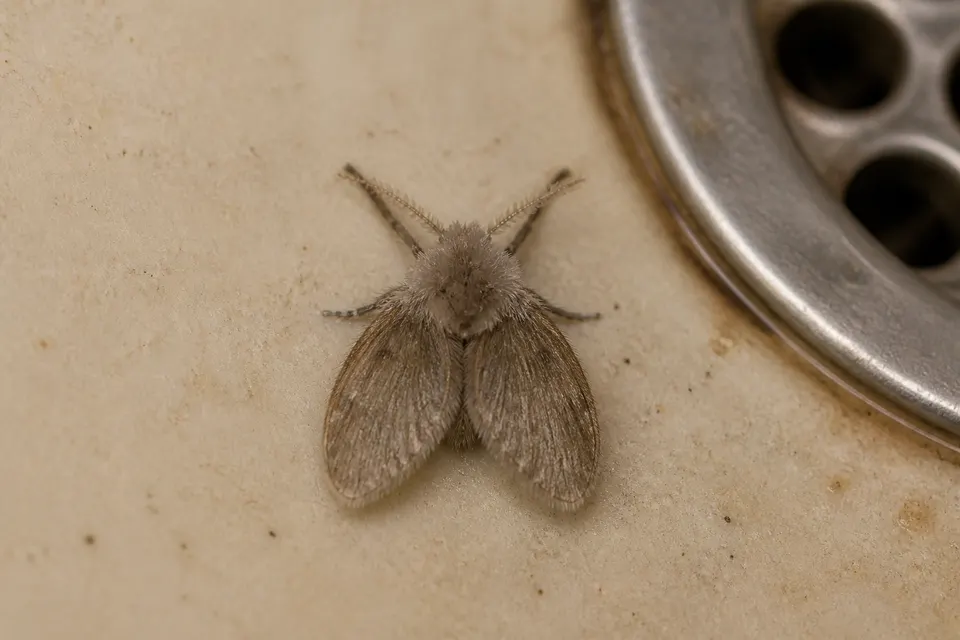
Drain fly
Psychodidae
Drain flies are fuzzy, moth-like, weak fliers that rest on bathroom walls. They breed in the gelatinous film inside pipes, not…
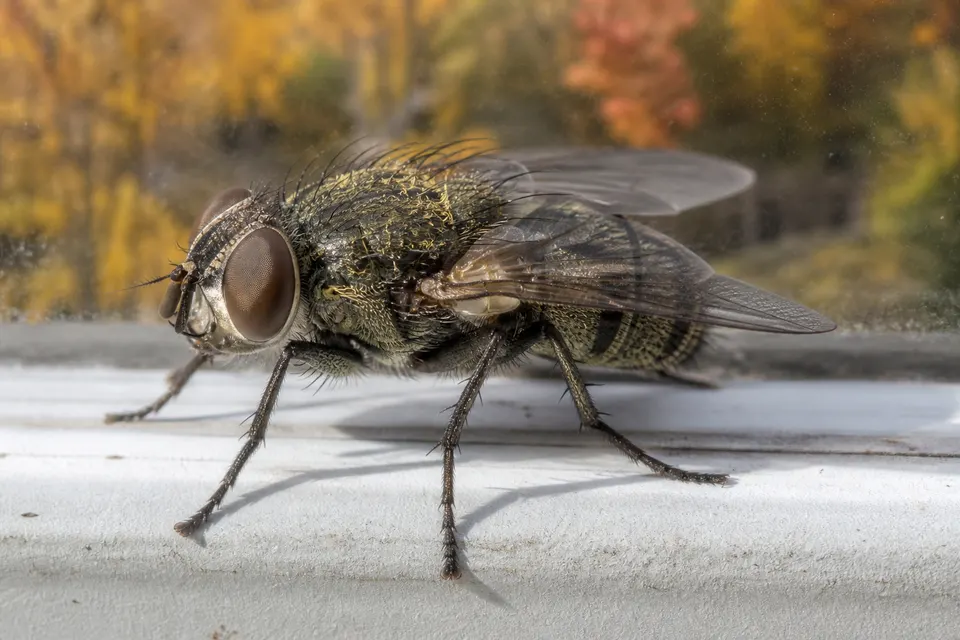
Cluster fly
Pollenia spp.
Cluster flies lumber into attics on warm fall days and cluster in windows in winter. They develop as parasites of earthworms —…
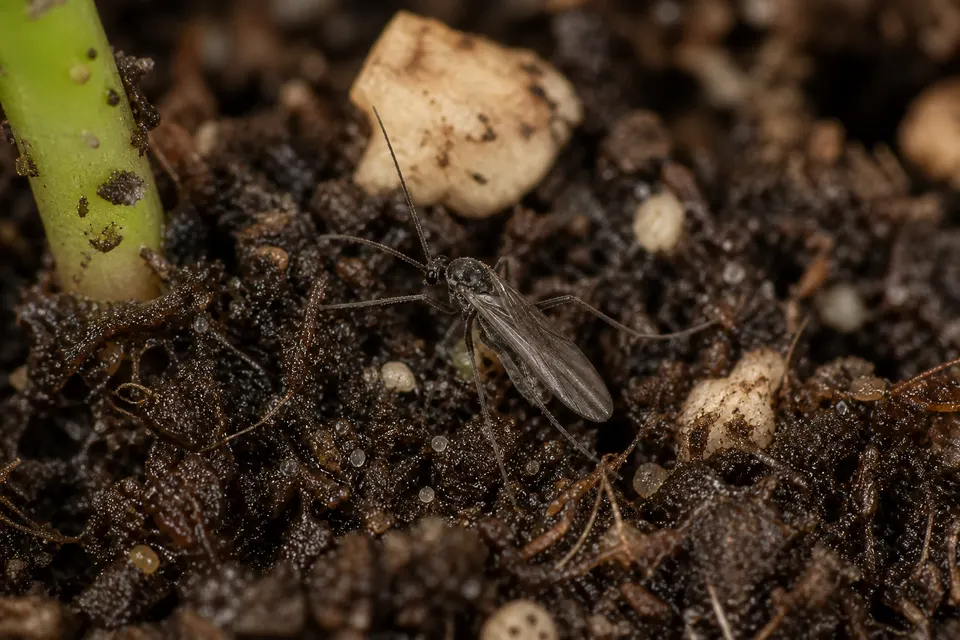
Fungus gnat
Sciaridae / Mycetophilidae (sciarid types in pots)
Sciarid fungus gnats are weak fliers around pots, not a cloud over a fruit bowl. Larvae live in the top inch of wet mix…
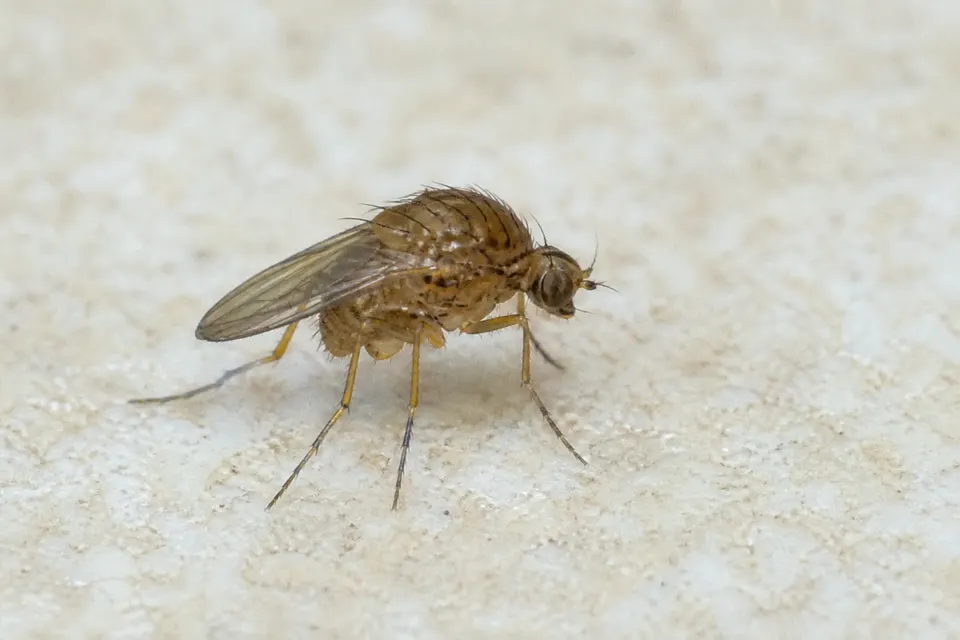
Phorid fly
Phoridae
Phorid flies run erratically across surfaces with a humped thorax. When they persist after you cleaned the trash, think a dead…
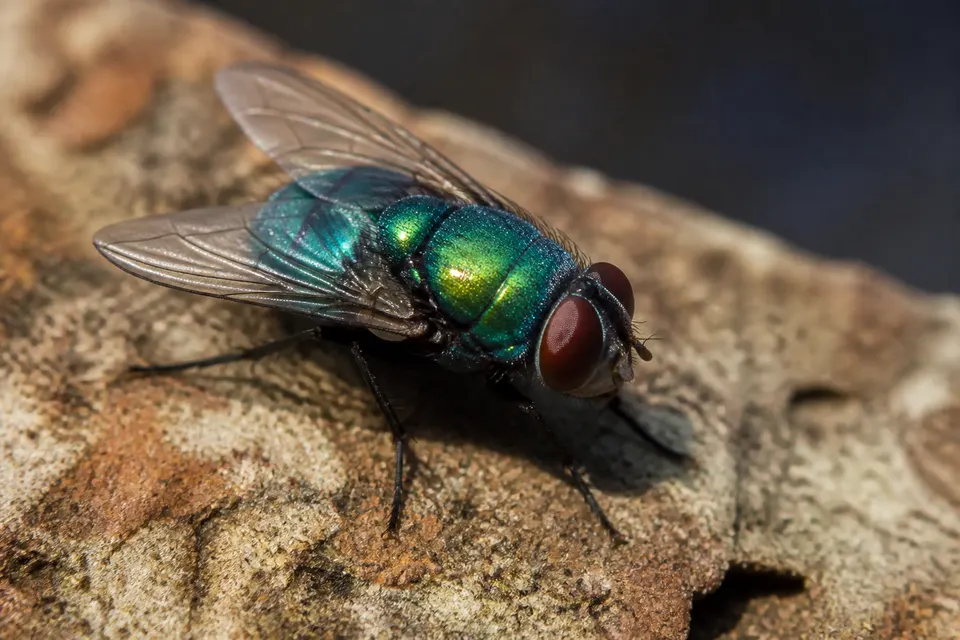
Blow fly
Calliphoridae
Blow flies are the metallic green or blue flies that find a dead animal fast. A sudden indoor hatch often means a mouse or bird…