PK-W06 · Nuisance wildlife
How to get rid of Nine-banded armadillos
Dasypus novemcinctus
Armadillos root in lawns for insects and can den under sheds. They are associated with Mycobacterium leprae in some southern research — do not handle them, and do not cook folklore. Control is exclusion of dens, reducing night watering that brings grubs to the surface, and legal trapping where allowed. They are not rodents. A fence must go down as well as up because they dig.
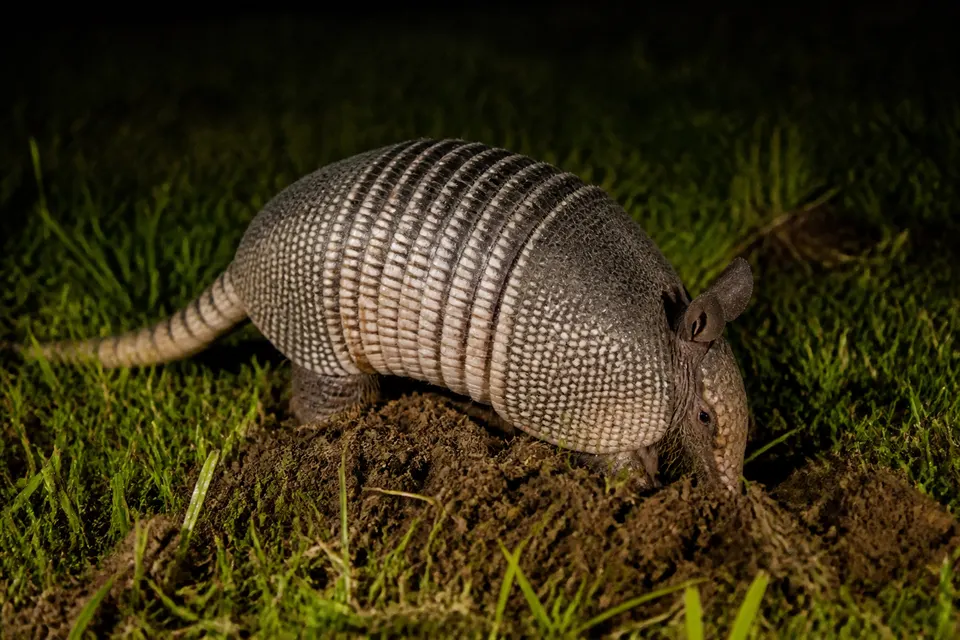
How to identify Nine-banded armadillo
- Armored bands, nocturnal, cone digging in turf, burrows under slabs and sheds.
- Tracks and rooted holes in lawns.
Signs of an infestation
- Pitted lawns in the morning.
- A den under a shed. Roadkill in the South (sadly diagnostic of range).
Biology and why they show up
Insectivores, poor vision, expanding range with climate and habitat. They can swim. Young may share burrows.
Health and property risk
Lawn damage, undermining, and a leprosy-association reason not to wrestle them. Bites if handled. Vehicle collisions.
Proven control sequence
Work in this order. Skipping inspection or exclusion is why most “treatments” bounce back in a week.
- Do not handle. Public-health caution. Not a pet.
- Exclude dens with buried mesh after vacancy. Confirm the animal is out. Same deck-skirt logic.
- Reduce night irrigation if grub hunting is the draw. Turf IPM. Not a guarantee.
Prevention that actually sticks
- Skirt sheds. Do not leave pet food out.
- Fence buried at the base if legal and practical.
When to hire a licensed professional
HOAs, large properties, and dens under occupied structures.
United States and Tier 1 notes
Texas, Gulf, Southeast, expanding north. Not a New England native.
Common questions
Can I get leprosy from my yard?
Risk is associated with handling armadillos, not mowing. Do not grab them. See CDC on Hansen’s disease and armadillos if you need the medical nuance.