Legs, speed, and habitat
House centipede vs millipede
After rain, people find many-legged animals and search both names. A house centipede is a fast wall hunter. A millipede is a slow coil of wet leaf litter. Control overlaps on moisture. Biology does not. This page is the side-by-side; the house centipede and millipede articles have the full sequences.
Legs, speed, and habitat
| House centipede | Millipede | |
|---|---|---|
| Legs | Very long; 15 pairs on Scutigera | Two pairs per body ring; looks like a bottle brush |
| Speed | Blur on bathroom tile at night | Slow; coils when poked |
| Habitat | Basements, bathrooms, prey insects | Mulch, leaf litter, slabs after rain |
| Diet | Hunts silverfish, spiders, other arthropods | Wet decaying plants |
| Indoors | Can live in a damp building with prey | Usually a wanderer that then dries out and dies |
Risk and what actually works
House centipedes can pinch if grabbed. Outdoor giant centipedes in the South are a different animal. Millipedes do not hunt; some species irritate skin with secretions. Neither eats sound timber.
Shared first moves: dry the foundation, pull mulch, seal gaps. Then split: House centipede if you still have hunters and prey; Millipede if you have rain invasions from beds. Sowbug and pillbug is the armored isopod that also comes from wet mulch.
Species pages
Each species article has the control sequence and safety notes. This page only splits look-alikes.
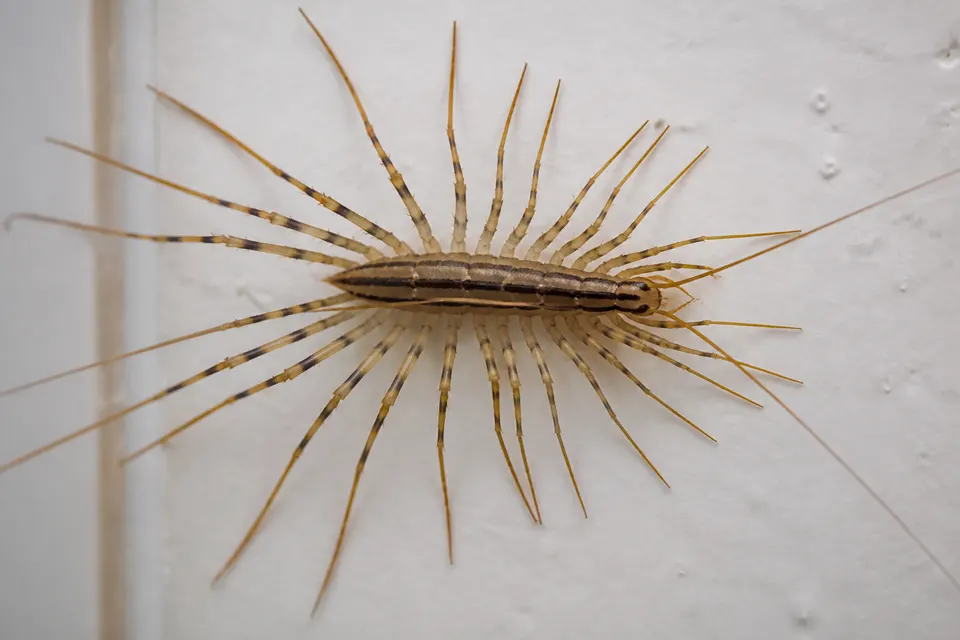
House centipede
Scutigera coleoptrata
Scutigera coleoptrata is the long-legged indoor hunter that runs on bathroom tile at night. It can pinch if…
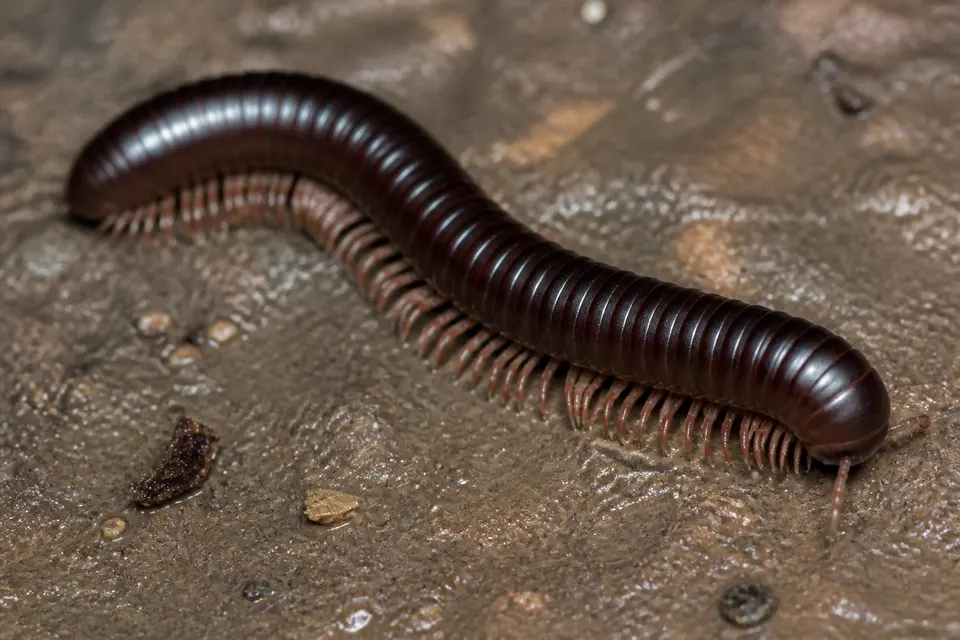
Millipede
Diplopoda
Millipedes are rounded, many-legged detritivores. They invade after heavy rain or irrigation, then die on…
Common questions
How do I get rid of millipedes and centipedes in my house?
Dry the foundation and seal gaps first. Then follow the house centipede page if you still have fast wall hunters, or the millipede page if they coil after rain.
Is a house centipede a millipede with extra legs?
No. Different classes. One hunts; one eats wet leaves.